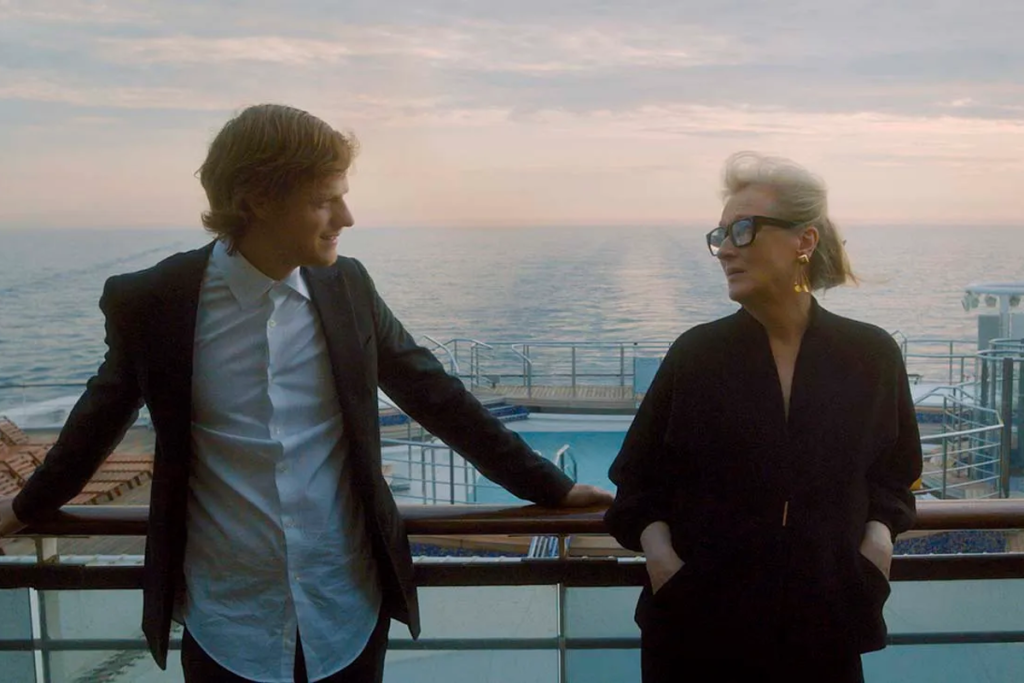

While many films set on cruise ships veer into disaster or farcical comedy, a select few are noted for their authentic depiction of the cruise experience. Below is a list of movies that capture shipboard life – from daily routines and amenities to crew-passenger interactions and shore excursions – in a realistic way. Each film is briefly described with an emphasis on what makes its portrayal of cruising especially true-to-life.
Let Them All Talk (2020)
Steven Soderbergh’s comedy-drama Let Them All Talk is lauded for its remarkably authentic cruise setting. It was filmed entirely aboard Cunard’s Queen Mary 2 during a real transatlantic voyage, so nearly every scene showcases genuine shipboard locations. The film features actual onboard venues – from a Queens Grill luxury suite and dining room to the ship’s Illuminations planetarium and even its G32 nightclub. Because the actors and crew were shooting on an active 7-day crossing with real passengers in the background, the atmosphere feels true to an ocean liner voyage. If you’re a ship lover, this movie is a must-see – critics noted that “just about every major venue on the ship gets a cameo,” lending the whole film a verisimilitude rarely seen in Hollywood portrayals. From casual promenade strolls to formal dinners, Let Them All Talk offers an unvarnished slice of life on a modern cruise, with naturalistic interactions among guests and crew that ring true to the real thing.
Like Father (2018)
A Netflix dramedy about an estranged father and daughter reconnecting, Like Father doubles as a surprisingly realistic tour of a contemporary mega-ship cruise. It was filmed on Royal Caribbean’s Harmony of the Seas, one of the world’s largest cruise ships, and functions almost like a cruise line commercial in its detail. The film prominently features real onboard amenities and activities – for instance, the ship’s famous FlowRider surf simulator is shown in action. From lavish buffets and poolside games to karaoke nights and shore excursions, many facets of typical cruise life are woven into the story. Critics noted that the cruise ship almost becomes the star of the film, with the ship’s amenities taking center stage in a very true-to-life way. Indeed, one review remarked that Like Father “mostly comes across as an advert for a Royal Caribbean cruise,” since it so faithfully showcases the onboard experience. In terms of accuracy, the movie’s depiction of friendly crew, busy activity schedules, and the general upbeat atmosphere onboard will feel familiar to anyone who’s taken a Caribbean cruise vacation.
Out to Sea (1997)
This comedy (starring Walter Matthau and Jack Lemmon) is often cited by cruise enthusiasts as one of the best portrayals of classic cruise ship life. In fact, Cruise Critic calls Out to Sea “the best-ever cruise film” for how it captures onboard atmosphere with humor. The story follows two retirees who become dance hosts on a luxury cruise, which sets the stage for showing many everyday shipboard scenes. Uniquely, the movie was filmed on a real cruise vessel – Holland America’s MS Westerdam – with additional interior scenes shot on the historic Queen Mary (docked in Long Beach) to represent the ship’s ballroom, casino, shops and other facilities. Because of this, the surroundings (from teak decks to dining salons) look authentic. Out to Sea also gets the little details right: the protagonists report to a crusty cruise director (played to perfection by Brent Spiner) and mingle with passengers during typical cruise activities. The film gently satirizes things like singles mixers and talent shows, but beneath the comedy you see true-to-life elements of crew–passenger interactions and daily routines on a midsize ship. It’s a lighthearted look at cruising that still feels real – from the structured social events to the onboard etiquette – especially reflecting the 1990s cruising era.
Carry On Cruising (1962)
A vintage pick, this British comedy provides a surprisingly genuine glimpse of cruising in the early 1960s. Part of the UK’s famous “Carry On” series, the film follows a cruise ship captain and his bumbling crew through a series of humorous mishaps with passengers. Despite the slapstick laughs, Carry On Cruising is remembered for “show[ing] a lovely slice of ship life” of that era. The sets and scenarios were inspired by real cruise liners of the time – you see period-accurate dining rooms, lounges, and cabins, and typical activities like costume parties and deck games (albeit with comedic exaggeration). The film’s focus on everyday events – welcoming new passengers aboard, dinner seating dramas, crew romances, etc. – paints an authentic picture of how cruises operated in the mid-20th century, even as it parodies them. Fans note that behind the campy, low-brow humor, there’s a genuine affection for classic cruising traditions. For those curious about the atmosphere on old-style ocean liners (with formal dress codes and regimented schedules), this movie offers a lighthearted but informative window.
Ship of Fools (1965)
On the dramatic end, Ship of Fools is a serious ensemble drama that takes place aboard a transatlantic ocean liner in 1933 – and it excels in portraying the social atmosphere of a long voyage. The film follows a diverse group of passengers (and some crew) over several weeks at sea, delving into their personal stories and class interactions. Rather than big melodrama or disaster, the emphasis is on realistic human dynamics in the confined world of the ship. The portrayal is so true-to-life that the shipboard society serves as a “microcosm of society,” exploring prejudice, class divisions, and human nature” during that era. Everything from the daily first-class vs. steerage divide, to the cordial dinners and deck strolls, to the brewing tensions among strangers in close quarters is captured with authenticity. The production designed the sets to resemble an ocean liner of the 1930s, and the period details (wardrobe, decor, etiquette) are meticulous. There are no sensational events – just the natural drama of disparate people stuck on a ship together, which any cruiser will recognize on a smaller scale. Ship of Fools is often praised for how true it feels to an old ocean voyage, giving a realistic glimpse at onboard life before the modern cruise vacation existed.
Titanic (1997) – Historical Authenticity
James Cameron’s Titanic is famously a romance–disaster epic, but it’s included here for its historical accuracy in depicting ocean liner life during 1912. While the love story is fictional, the film was “heralded as one of the most historically accurate versions of the ship ever put on screen” in terms of design and atmosphere. Cameron went to great lengths to recreate the RMS Titanic’s physical details: the grand staircases, first-class dining saloon, smoking lounge, and even third-class quarters are rendered with near-complete authenticity to White Star Line records. Before the iceberg strikes, the movie truly immerses viewers in the experience of a luxury ocean voyage: promenading on deck, listening to the string quartet after dinner, enjoying elaborate meals with fine china – contrasted with the steerage passengers dancing a jig below decks. These scenes give a vivid feel for the class and social structure on early 20th-century liners. Historians have noted that the film’s depiction of the ship’s layout, amenities, and even many small passenger customs is spot-on. For example, you see the routine of lifeboat drills, the hierarchy of crew officers, and the nightly rituals of wealthy travelers, all presented in line with historical accounts. In short, Titanic (though dramatized) offers a richly researched window into what an Edwardian-era “cruise” (technically an ocean crossing) was like, from opulence to everyday leisure – lending the film a level of authenticity that resonates with maritime history buffs and cruise fans alike.
Dil Dhadakne Do (2015)
This Hindi-language dramedy provides a modern and culturally unique take on a cruise vacation, praised for its realistic setting. Dil Dhadakne Do follows a wealthy Indian family and their friends on a 10-day cruise of the Mediterranean, and it was shot almost entirely on a real cruise ship sailing to actual ports in Europe. Because of this on-location filming, the shipboard environment feels very genuine: the film shows extensive footage of life aboard – from passengers sunbathing on deck and enjoying entertainment in the atrium, to group shore excursions in Turkey and Greece. There are lavish gala dinners, live shows, and even crew members interacting with guests, all portrayed true to form. The movie doesn’t shy away from the mundane aspects of cruising either; we see the characters strolling the promenade, hitting the gym, and dealing with cramped cabin quarters just like real cruisers. Importantly, the dramatic conflicts (family arguments, romantic flings, personal reflections) unfold in believable cruise scenarios – e.g. tensions flaring during a captain’s dinner, or confidences shared while gazing out at the open sea. The blend of personal drama with the cruise’s scheduled fun events feels organic. In short, Dil Dhadakne Do offers an authentic snapshot of a cruise holiday as a backdrop to its story, and it’s one of the few films to depict the day-to-day rhythms of a cruise (especially a luxury international cruise) so thoroughly on screen.
Yucatán (2018)
A Spanish comedy caper, Yucatán earns a spot for its faithful rendering of the cruise setting as the stage for its story. The film is set entirely aboard a large cruise ship traveling from Spain to the Canary Islands, and notably it was filmed on a real vessel: Pullmantur Cruises’ MV Sovereign (a former Royal Caribbean ship). This means the visuals are genuinely those of a working cruise ship – the bustling lido deck, the ornate main dining room, the casino and theaters – all real, not soundstage recreations. Yucatán follows two con men scheming against wealthy passengers, which leads the plot through many everyday cruise activities (with a comedic twist): you see the characters participating in dance nights, shore excursions, crew variety shows, and even engine-room tours. The crew–passenger interactions and ship protocols are depicted accurately amid the humor. And because Pullmantur was a Spanish line, the film gives an authentic look at a more European-style cruise experience – announcements in multiple languages, culturally tailored entertainment, etc. Cruise observers have noted that Yucatán showcases the ship itself extremely well, almost as an homage; ironically, the Sovereign was retired soon after, making this film a sort of time capsule of that ship. For viewers, it provides an enjoyable and credible peek at cruise life (meals, ports, and onboard antics included), even as the characters’ outrageous scam plot unfolds.
Honorable Mentions: A Night to Remember (1958) – a classic depicting the Titanic sinking with documentary-like realism (often praised as the most historically accurate Titanic film), and The Love Boat (1977–1986 TV series) – which, while a TV show and somewhat idealized, introduced a generation to the idea of fun, romantic cruise vacations and was filmed on real cruise ships. These aren’t feature films in the modern sense of cruise vacations, but they underscore how cruising has been portrayed realistically in media over time.